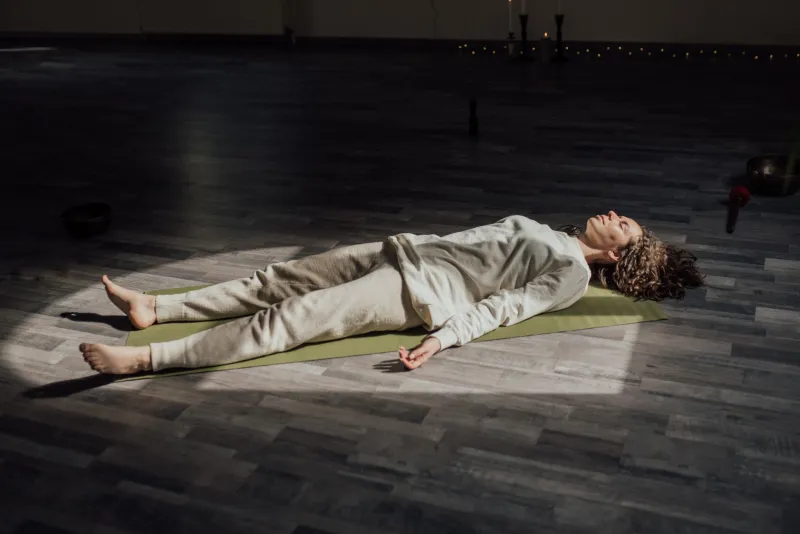
Your Breath Is the Remote Control: A Practical Guide to Calming a Wired Nervous System
Let's be honest about the world we're living in right now. Notifications arrive before we've finished a thought. News cycles churn 24 hours a day. Work bleeds into evenings, weekends, and the moments right before sleep. Overstimulation isn't an occasional inconvenience anymore — it's the default setting.
And our nervous systems are paying the price.
Anxiety rates in the US have been climbing for years. Chronic stress has become so normalized that many of us have stopped recognizing it as stress at all — we just call it "being busy." We reach for caffeine to push through, melatonin to come down, and scroll through our phones in between, wondering why we can't quite settle.
But here's the thing no one put in the wellness app: you were born with a built-in regulation system. You've been using it your entire life without realizing it. And with a little intention, it can become the most powerful tool in your daily practice.
It's your breath.
Why Breath Is Different From Every Other Wellness Tool
Most wellness interventions require something external — a supplement, a studio membership, a specific piece of equipment. Breath requires nothing except the body you're already in.
But what makes breathwork genuinely remarkable isn't its accessibility — it's its mechanism. Breathing is the only autonomic function you can consciously control. Your heart rate, your digestion, your hormone release — these happen without your input. But breathing sits at the intersection of the voluntary and the involuntary. That means intentional breath is a direct dial into your autonomic nervous system.
Specifically, it's a pathway to your vagus nerve — the long, wandering nerve that connects your brain to your heart, lungs, and gut, and plays a central role in your body's "rest and digest" response. When you breathe slowly and deliberately, you stimulate vagal tone, which signals to your entire system: you are safe. You can relax now.
This isn't metaphor. This is neuroscience.
Dr. Andrew Huberman's research at Stanford has brought this into mainstream conversation, but the underlying wisdom has existed for thousands of years in yogic pranayama traditions, Taoist breathing practices, and Indigenous healing ceremonies across cultures. Modern science is catching up to what ancient practitioners already knew in their bodies.
The Physiology of Stress (And How Breath Interrupts It)
When your brain perceives a threat — whether it's a deadline, a difficult conversation, or just the relentless ding of your inbox — your sympathetic nervous system activates. Cortisol and adrenaline flood your system. Your heart rate rises. Your muscles tighten. Your digestion slows. You're ready to fight or flee.
This is brilliant design for surviving a physical threat. It's genuinely terrible for living a sustainable life in 2024, where the "threats" are mostly psychological and never fully resolve.
The problem is that many of us are running this stress response almost continuously, with barely enough recovery time in between for our systems to reset. We're operating in low-grade fight-or-flight as a baseline, and we've normalized it so thoroughly that calm actually feels suspicious.
Slow, controlled breathing — particularly extending the exhale — activates the parasympathetic nervous system, the counterbalance to stress. It's not a placebo. It measurably lowers heart rate, reduces cortisol, and shifts brain activity toward states associated with focus, creativity, and emotional regulation.
Four Techniques to Start Using Today
You don't need to overhaul your entire routine. These are tools you can reach for in the middle of a hard day, before a difficult conversation, or as part of a morning practice.
Physiological Sigh (for immediate relief): Take a double inhale through the nose — a full breath, then a quick top-off — followed by a long, slow exhale through the mouth. This technique, studied extensively by researchers at Stanford, deflates the tiny air sacs in your lungs that collapse under stress, rapidly shifting your nervous system state. One or two rounds is often enough to feel a noticeable shift.
4-7-8 Breathing (for anxiety and sleep): Inhale for 4 counts, hold for 7, exhale for 8. The extended hold and long exhale stimulate the vagus nerve and slow the heart rate. This is particularly effective before bed or during moments of acute anxiety. Start with four cycles.
Box Breathing (for focus and regulation): Inhale for 4 counts, hold for 4, exhale for 4, hold for 4. This technique, used by Navy SEALs and high-performance athletes, balances the nervous system without tipping heavily into either activation or sedation. It's ideal before a presentation, a creative session, or any situation requiring steady presence.
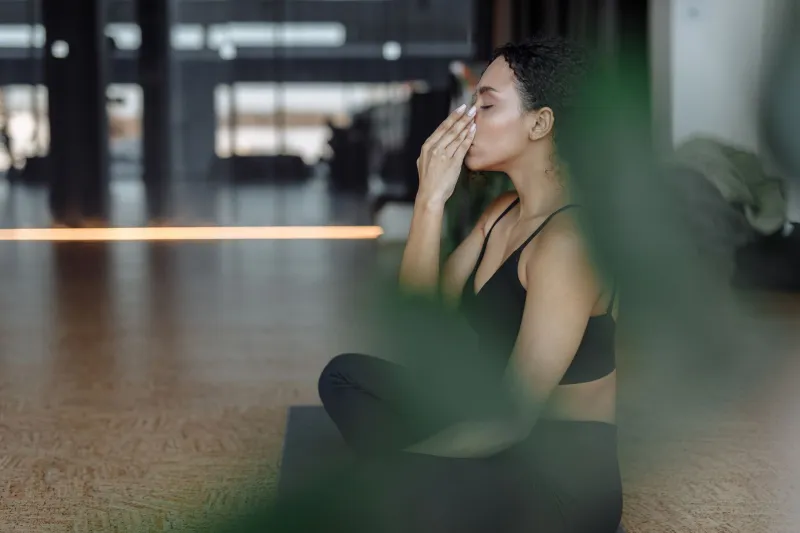
Alternate Nostril Breathing (Nadi Shodhana, for balance): A yogic practice that involves alternating breath between nostrils using specific hand positioning. Research suggests it can balance activity between the brain's hemispheres and reduce blood pressure. It sounds unusual until you try it — and then it becomes one of those practices you can't believe you lived without.
Making Breath a Practice, Not a Rescue
Here's the nuance most people miss: breathwork is most powerful when it's a daily practice, not just a crisis intervention. Using breath only when you're already in the red is like waiting until you're dangerously dehydrated to drink water. It helps, but it's reactive.
Building even five minutes of intentional breathwork into your morning — before the phone, before the news, before the demands of the day stack up — creates a regulated baseline that makes you more resilient to stress throughout the day. You're not just putting out fires. You're building a nervous system that doesn't catch fire as easily.
Pair it with movement, with stillness, with creativity. At Elevated Sol, we believe the body and the practice are inseparable — breath is the thread that runs through all of it, whether you're moving through a yoga flow, settling into a meditation, or sitting down to make something.
Sovereignty in a Chaotic World
There's something quietly radical about reclaiming your nervous system in a culture that profits from your dysregulation. Anxious, overstimulated people consume more — more content, more products, more quick fixes. A person who knows how to regulate themselves is, in some ways, harder to sell to.
Your breath is always available. It costs nothing. It requires no subscription, no influencer endorsement, no perfect conditions. In a world designed to keep you reactive, the simple act of breathing with intention is an act of profound self-determination.
Breathe in. Breathe out. Come back to yourself.
You have everything you need.