Progress You Can Hold: The Quiet Power of Keeping a Practice Record
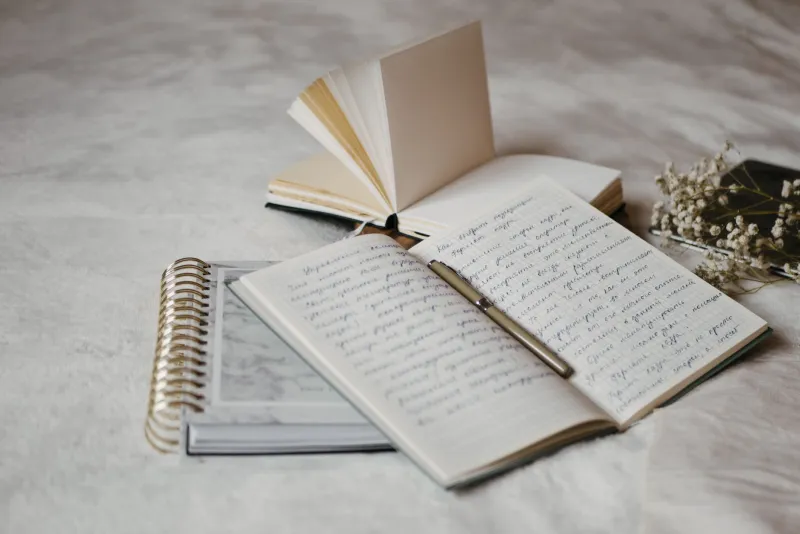
Somewhere in your closet, there's probably a journal from two years ago. Maybe it's a half-filled notebook with shaky notes from your first meditation attempt, or a sketchbook where page three is where things fell apart. Most of us treat those artifacts like evidence of failure.
We'd like to propose the opposite: they're the most valuable things you own.
The Level-Up Trap
American wellness culture runs on a simple, seductive promise: next month, you'll be better. Deeper backbend. Quieter mind. A more coherent painting style. The language of apps and boutique studios leans hard into progress bars and streak counts, and honestly, it works — right up until it doesn't.
Here's the problem with perpetual leveling up: it makes your current self a placeholder. You're not practicing yoga; you're waiting to be someone who can do a handstand. You're not drawing; you're waiting until you're "good enough" to deserve the good paper. Psychologists call this conditional self-regard, and it's the quiet killer of a thousand creative practices.
Perfection is a moving target. Documentation is a mirror.
What an Archive Actually Does
When you keep a simple record — three lines in a notebook after each session, a photo of every sketch no matter how rough, a running tally of meditation minutes — you change your relationship with time.
Without a record, progress is invisible. You feel like you've been doing this forever with nothing to show for it, because memory is a terrible historian. It remembers the bad days and deletes the ordinary, incremental wins.
With a record, something shifts. You flip back three months and see that the breath practice that now feels automatic was once confusing. That crow pose you nailed last Tuesday? There it is, in your own handwriting, dated — followed by six failed attempts and then a seventh try that held. The archive doesn't lie, and it doesn't flatter. It just shows you the truth: you were always becoming.
This is why working artists keep sketchbooks they never intend to show anyone, and why seasoned meditators often track sits in the most low-tech way possible. The record isn't for performance. It's proof of continuity.
Building Your Weekly Documentation Ritual
You don't need an app, a subscription, or a color-coded system. You need fifteen minutes on a Sunday and something to write with.
Keep it stupidly simple. After each session, jot three things: what you did, how it felt in one sentence, and one thing you noticed. That's it. "Tuesday: 20 min sit, restless, noticed I hold tension in my jaw." Over time, those sentences become a map of your inner weather.
Photograph the messy middle. If you make art, shoot your workspace at its worst — paint water brown, brushes everywhere. These images are future-you's favorite content. Nobody frames the polished final; we fall in love with the evidence of process.
Do a monthly read-through. Once a month, pour a cup of something warm and reread your entries. Don't analyze. Just witness. You'll catch patterns — the practices that actually energize you versus the ones you do out of guilt — and that knowledge is worth more than any masterclass.
Resist the urge to curate. The archive works because it's honest. Leave in the skipped days, the grumpy notes, the drawing you hate. A record of perfection is just another performance.
Self-Compassion, Backed by Receipts
There's a sneaky bonus to all this: documentation is one of the most effective self-compassion tools we've encountered. When you're in a low week — sick, swamped, heartbroken — the archive talks you off the ledge. It says, in your own handwriting: you have shown up 84 times before. This is a chapter, not the whole book.
Compare that to the streak-based apps, where one missed day nukes your progress and the shame spiral begins. The archive doesn't punish absence. It simply waits, patient as a good friend, for you to come back.
A Body of Work Worth Returning To
Maybe the deepest gift of documenting is this: eventually, you realize you've been building something. Not a transformation, exactly — more like a layered, imperfect, deeply personal body of work. A year of session notes reads like a letter to yourself. A shelf of dated sketchbooks tells a story no portfolio ever could.
So dig out that old journal. Don't cringe at it. That's page one of the archive.
Rise into your practice. Then write down that you did.