Slow Hands: What the Pottery Studio Knows About Your Yoga Mat
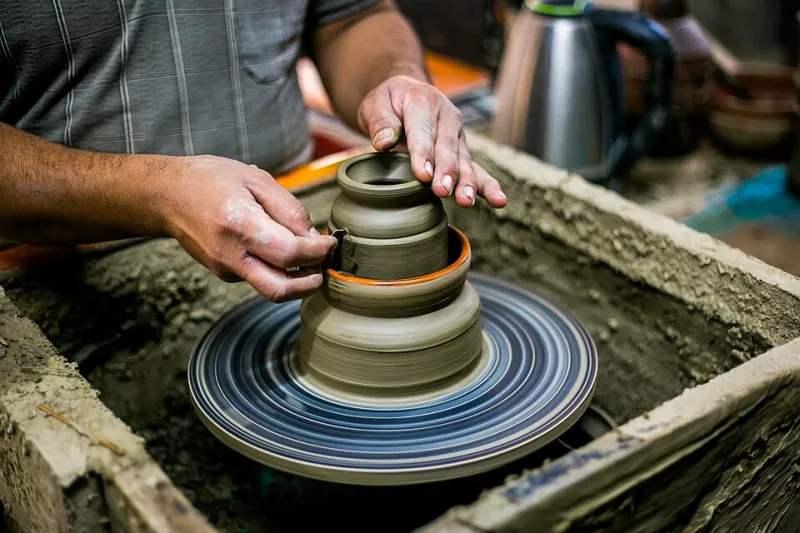
Photo: Rayhanphotos, CC BY-SA 4.0, via Wikimedia Commons
Spend an afternoon in any community pottery studio in America and you'll notice something odd: people leave calmer than they arrived. Not because of the clay's mystical properties, but because the wheel is a forced meditation chamber. It moves at one speed. Yours. And it punishes hurry instantly.
The wellness industry keeps reinventing what craft traditions never forgot. Here are five movements to steal from the makers.
1. The Potter's Downshift
On the wheel, rushing means the wall of your cup collapses. Every time. So potters learn to work at the speed of the material — a pace most of us touch only on vacation.
Try it today: Pick one household task — washing dishes, folding laundry — and do it at half your normal speed. When you feel the urge to accelerate, treat that urge like the collapsing clay wall: information, not instruction.
2. The Woodworker's Listening
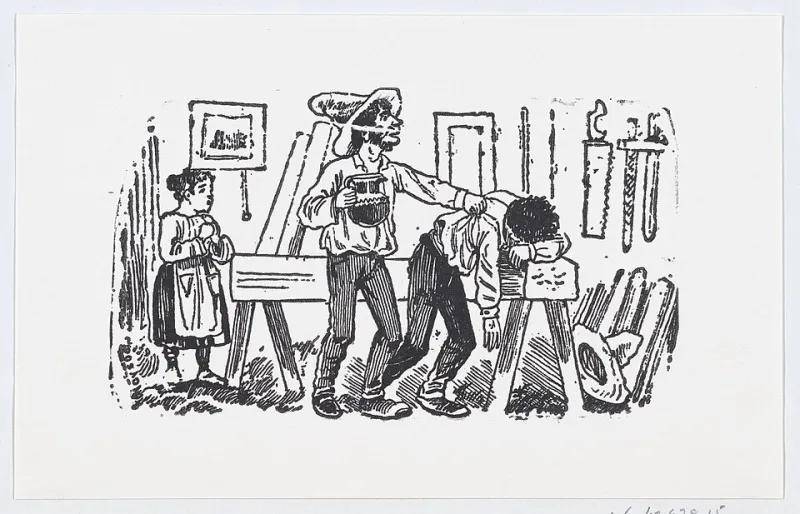
Good woodworkers say the grain 'tells you' which way to plane. That's not mysticism; it's attention. They've trained themselves to receive information through resistance instead of forcing through it.
Try it today: In your next yoga flow or stretch, stop directing for one full minute. Instead of 'now I will deepen the hamstrings,' ask 'what is the hamstring offering right now?' Follow resistance the way a woodworker follows grain — around, not through.
3. The Painter's Uncomfortable Stillness
Every atelier trains students to stand back and look before touching the canvas. Beginners hate this. The itch to fix, to move, to do something — it's the same itch that sends us reaching for our phones mid-meditation.
Try it today: Sit with your creative project — or your breath — for three minutes without changing anything. Notice the itch. Don't obey it. The itch has a half-life; wait it out and something sharper usually appears underneath.
4. The Quilter's Piecework Logic
Quilters don't make a quilt. They make one square, then another. The finished object is an abstraction; the square is real. This is how you survive any long practice — a meditation habit, a body of work, a recovery.
Try it today: Shrink your practice to its smallest honest unit. Not 'thirty minutes of meditation.' One square: three breaths, done completely. Then, if you want, another square. Quilts are just squares that kept happening.
5. The Ceramicist's Relationship With Failure
Here's what the kiln teaches that no app can: sometimes the piece you loved explodes in firing, and sometimes the piece you almost threw away comes out glowing. Craftsmen learn to hold outcomes loosely because the material demands it.
Try it today: Finish something badly on purpose. A lousy sketch, a clumsy journal entry, a wobbly bowl of a yoga sequence. Let it be finished and imperfect. The nervous system lesson is enormous: completion without perfection is survivable. Even generative.
The Apprenticeship You Already Have
You don't need to enroll in a woodworking program to get these benefits — though honestly, we'd cheer if you did. The point is that artistic disciplines were always double curricula: skill in the hands, regulation in the body. Every craft is a somatic practice wearing an apron.
So the next time your meditation feels stale or your flow feels rote, don't reach for a new app. Reach for a maker's move. Borrow the potter's pace, the painter's patience, the quilter's square. The wheel has been teaching presence for five thousand years. It knows some things.